Ebook Download The Case against Perfection: Ethics in the Age of Genetic Engineering
Thousands of ready-books to review are supplied in this web site. We, as on-line library website will certainly constantly give more recent or late upgrade of publications from lots of nations in the world. It will lead you to ease our means to seek for the variant sorts of books. Without travelling, without investing much cash, as well as without spending much time end up being some advantages of taking books from this web site. And here, a The Case Against Perfection: Ethics In The Age Of Genetic Engineering is among the most up to date publication rates.
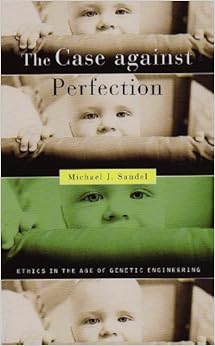
The Case against Perfection: Ethics in the Age of Genetic Engineering

Ebook Download The Case against Perfection: Ethics in the Age of Genetic Engineering
Now, exactly what do you consider the arising books this moment? A lot of books exist as well as released by many authors, from several nations in this globe. But, have you to be more discerning to select among the most effective. If you are confused on how you choose guide, you can draw from the subject to supply, the writer, and also the reference.
The existence of this book is not only recognized by the individuals in the country. Many societies from outside nations will also love this publication as the reading resource. The interesting subject and also timeless topic become one of the all reasons to manage reading this publication. The Case Against Perfection: Ethics In The Age Of Genetic Engineering likewise has the interesting packaging beginning with the cover layout and also its title, how the author brings the viewers to obtain into words, and exactly how the writer tells the material magnificently.
From the book, you will certainly realize that reading is absolutely needed to do. It will certainly guide you to get more valuable spending time. By checking out guides, your hung out will certainly not squander improperly. You can discover just what you want and needs to observe. Here, the The Case Against Perfection: Ethics In The Age Of Genetic Engineering ends up being a choice to read the book since it gives you the remarkable features of the life. Also it is just the representative are for getting this sort of book, you may see just how you can enjoy the book specifically.
When you have actually reviewed it much more web pages, you will certainly recognize more and more once more. In addition when you have actually checked out all ended up. That's your time to always bear in mind as well as do what the lesson and experience of this book offered to you. By this problem, you have to know that every book ahs different method to offer the perception to any viewers. But they will certainly be as well as should be. This is what the DDD always gives you lesson regarding it.
Review
“In the future, genetic manipulation of embryos is expected to have the potential to go beyond the treatment of diseases to improvements: children who are taller, more athletic, and have higher IQs...In The Case against Perfection, Michael Sandel argues that the unease many people feel about such manipulations have a basis in reason...This beautifully crafted little book...quickly and clearly lays out the key issues at stake.â€â€•Gregory M. Lamb, Christian Science Monitor“In this short and provocative treatise, Sandel, who is professor of government at Harvard and a member of the President's Council on Bioethics, takes on the question of why certain kinds of newly available genetic technologies make us uneasy...[his] book reminds us that the proper starting point for bioethics is not, "what should we do?" but rather, "what kind of society do we want?" And "what kind of people are we?"â€â€•Faith McLellan, The Scientist“The Case against Perfection by Michael Sandel is a brief, concise, and dazzling argument by one of America's foremost moral and political thinkers that brings you up to speed on the core ethical issues informing current debates about genetic engineering and stem cell research.â€â€•Gabriel Gbadamosi, BBC Radio“We live in a world, says Michael Sandel, where "science moves faster than moral understanding." But thanks to Sandel, moral understanding is catching up. Cloning, stem cell research, performance-enhancing drugs, pills that make you stronger or taller: if some scientific development bothers you, but you can't explain why, Michael Sandel will help you to figure out why you're troubled. And then he'll tell you whether you should be.â€â€•Michael Kinsley“Sandel explores a paramount question of our era: how to extend the power and promise of biomedical science to overcome debility without compromising our humanity. His arguments are acute and penetrating, melding sound logic with compassion. We emerge from this book feeling edified and inspired.â€â€•Jerome Groopman, Harvard Medical School, author of How Doctors Think“Nobody's perfect, and Mr. Sandel's book makes an instructive and engaging case that that nobody should be.â€â€•Yuval Levin, New York Sun“[A] graceful and intelligent new book.â€â€•Carl Elliott, New England Journal of Medicine“In a highly readable, wise and little book titled The Case against Perfection: Ethics in the Age of Genetic Engineering, Michael Sandel argues that parents' quest to create the ideal child reflects a drive for mastery and domination over life.â€â€•Douglas Todd, Vancouver Sun“Given the vast gulf between progressive and conservative thinking, the time is ripe for a philosopher to take on the issues of biotechnology. And in The Case against Perfection Harvard's Michael Sandel does just that, attempting to develop a new position on biotechnology, one that, like Sandel himself, is not easily identified as either left or right. A former member of the President's Council on Bioethics, Sandel is uniquely well suited for this task, and to challenge the left to get its bearings on the brave new biology...Sandel poses an important challenge to contemporary progressives who have failed to grasp the importance of the emerging biopolitics.â€â€•Jonathan Moreno, Democracy“An illuminating ethical analysis of stem-cell research concludes this stellar work of public philosophy.â€â€•Ray Olson, Booklist
Read more
About the Author
Michael J. Sandel is Anne T. and Robert M. Bass Professor of Government at Harvard University.
Read more
Product details
Paperback: 176 pages
Publisher: Belknap Press: An Imprint of Harvard University Press; 1 edition (September 30, 2009)
Language: English
ISBN-10: 9780674036383
ISBN-13: 978-0674036383
ASIN: 0674036387
Product Dimensions:
4.2 x 0.5 x 7 inches
Shipping Weight: 1.6 ounces (View shipping rates and policies)
Average Customer Review:
3.5 out of 5 stars
25 customer reviews
Amazon Best Sellers Rank:
#89,260 in Books (See Top 100 in Books)
Good, and well organized. So well organized that I'll use his organization to refute him point by point.
I bought this book for one of my university courses. It is very unclear and ambigous. It just addresses problems exist in the field of biotech and gen engineering. You could find better books if you are interested in these topics. BTW it can be used as a source of research since it contains almost every approaches to the topic.
The book was an interesting read, but frustrating. There was a genetic determinism about the discussion that made the author's stand feel naive. Clearly the variation in many human features are constrained to a particular range by genetics, but this does not mean that any individual can be engineered to guarantee the development a particular trait. Even extremely pro-genes books like The Nurture Assumption leave an important role for environment in human development (Harris just doesn't think parents are a particularly influential part of that environment).The gift argument is repeated throughout, but not supported very well. Sandel also discusses genetic modifications as arms races, but misses the fact that the "improvement" of human characteristics need not entail an arms race or a zero sum game. There are traits that have a value that is non-competitive. If research has found that people with a happiness score of 8-9 on a scale of 1-10 succeed most in life, it is correct to note that success in many fields is competitive. Yet, the feeling of happiness and enjoyment of life is not a zero sum game. Every human can enjoy this at the same time. If genetic engineering made us all 8-9 on the happiness scale, we would all benefit individually in our quality of life, though we would only be keeping pace with regards to competitive advantage. Again, Sandel misses this nuance and his discussions suffer from it.The part of the book I felt was worth reading was the section regarding hyper-parenting. This was a point neglected in other books I have read on the subject, such as Agar's and Glover's. Nevertheless, the other books are far superior discussions of the subject with more exhaustive and nuanced discussions of genetic engineering.I would advise against reading only this book when reading on this subject. This book should be read to offer another perspective after reading a more well rounded discussion like Glover's. As with any of the books I mention in this review, you should understand views on the role of genetics in development before reading the books. Don't expect the books to teach those details, though Agar's does contain good discussions regarding the fallacy of genetic determinism.
I bought this book as a required text for a class. Came in a good quality and was happy with Amazon services.
Sandel is a great philosopher, He challenges the notions and in the same instance make you come up with your own 'morals' when it comes to genetic engineering. I had to buy this book for a course but read it 4 times since.
Pretty great, thought challenging read.
Short essays with interesting hypothetical situations of treating embryos, I found it insightful to read this book, like an extension of the first few chapters of Justice, I found it hard to give a rating lower than 4.
At times, this book reads like a prolegomena to Sandel's "Justice: What's the Right Ting to Do" in terms of argument and some of the examples he gives to illustrate his moral reasoning, but "The Case..." is worth reading anyway - especially for those who are interested in bioethics within a broader context of Aristotelian reasoning.
The Case against Perfection: Ethics in the Age of Genetic Engineering PDF
The Case against Perfection: Ethics in the Age of Genetic Engineering EPub
The Case against Perfection: Ethics in the Age of Genetic Engineering Doc
The Case against Perfection: Ethics in the Age of Genetic Engineering iBooks
The Case against Perfection: Ethics in the Age of Genetic Engineering rtf
The Case against Perfection: Ethics in the Age of Genetic Engineering Mobipocket
The Case against Perfection: Ethics in the Age of Genetic Engineering Kindle
0 komentar:
Posting Komentar