Free PDF
Not just from the nation, have individuals around the world liked this publication so much. They are the excellent people, individuals that constantly have willingness as well as spirit to review as well as boost their ability as well as expertise. Will you be just one of the? Absolutely, when you are relay interested in, you can be one of the excellent people. This is presented to attract you since it is so straightforward to understand. Yet, the meaning is so deep. You could seem like dealing with as well as acting on your own.

Free PDF
Collection as well as publication shop are two important locations to obtain guides to check out. However, in contemporary era, it will certainly not just evoke the two areas. Lots of sites are now readily available for the internet collection. As below, finding the hundreds of books titles from within and also outside of this nation is easy. You might not just want to take guide however also casual education. As revealed, collection can be a casual education and learning system to expand the expertise, from any sources.
Reading this book will certainly not obligate you to function as what distinguished this publication. It will really guarantee you to see how the globe will certainly run. Every statement as well as activity of guide will certainly motivate you to assume more as well as think much better. There is nobody that will not be ready to obtain the opportunities. Everybody will certainly need the opportunity to transform and boost their life as well as problem.
By seeing this page, you have actually done the best looking point. This is your begin to choose guide that you want. There are lots of referred books to read. When you would like to obtain this as your publication reading, you could click the link web page to download and install In couple of time, you have owned your referred books as yours.
After getting this book somehow, you will see exactly how this publication is really essential for you. It is not only for getting the encouraged publications to compose however also the impressive lessons and also impressions of guide. When you truly love to read, attempt currently as well as read it. You will never ever be regret after getting this book. It will certainly show you and direct you to obtain better lesson.
Product details
File Size: 604 KB
Print Length: 288 pages
Publisher: Farrar, Straus and Giroux; 2 edition (September 22, 2001)
Publication Date: September 22, 2001
Sold by: Amazon Digital Services LLC
Language: English
ASIN: B004OA64CK
Text-to-Speech:
Enabled
P.when("jQuery", "a-popover", "ready").execute(function ($, popover) {
var $ttsPopover = $('#ttsPop');
popover.create($ttsPopover, {
"closeButton": "false",
"position": "triggerBottom",
"width": "256",
"popoverLabel": "Text-to-Speech Popover",
"closeButtonLabel": "Text-to-Speech Close Popover",
"content": '
});
});
X-Ray:
Not Enabled
P.when("jQuery", "a-popover", "ready").execute(function ($, popover) {
var $xrayPopover = $('#xrayPop_7BB2D9F45B4911E9A3EBF329A6E72B04');
popover.create($xrayPopover, {
"closeButton": "false",
"position": "triggerBottom",
"width": "256",
"popoverLabel": "X-Ray Popover ",
"closeButtonLabel": "X-Ray Close Popover",
"content": '
});
});
Word Wise: Enabled
Lending: Not Enabled
Screen Reader:
Supported
P.when("jQuery", "a-popover", "ready").execute(function ($, popover) {
var $screenReaderPopover = $('#screenReaderPopover');
popover.create($screenReaderPopover, {
"position": "triggerBottom",
"width": "500",
"content": '
"popoverLabel": "The text of this e-book can be read by popular screen readers. Descriptive text for images (known as “ALT textâ€) can be read using the Kindle for PC app if the publisher has included it. If this e-book contains other types of non-text content (for example, some charts and math equations), that content will not currently be read by screen readers.",
"closeButtonLabel": "Screen Reader Close Popover"
});
});
Enhanced Typesetting:
Enabled
P.when("jQuery", "a-popover", "ready").execute(function ($, popover) {
var $typesettingPopover = $('#typesettingPopover');
popover.create($typesettingPopover, {
"position": "triggerBottom",
"width": "256",
"content": '
"popoverLabel": "Enhanced Typesetting Popover",
"closeButtonLabel": "Enhanced Typesetting Close Popover"
});
});
Amazon Best Sellers Rank:
#628,657 Paid in Kindle Store (See Top 100 Paid in Kindle Store)
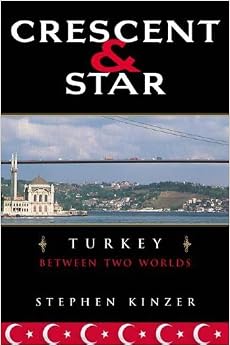
Stephen Kinzer’s rambling walk through the saga of modern Turkey will delight the ordinary reader with an interest in this ‘bridge nation’, while occasionally distressing the historian.The dedication of this revised version (‘To the People of Turkey’) signals that Kinzer writes 51aed7hll-_sx331_bo1204203200_from the heart and with affection rather than from the discipline and precision one expects of the historian. This is not a criticism of Kinzer’s formidable work but rather an attempt to define its genre. Those who came to Kinzer’s writing—as this reviewer did—through his superb treatment of the Nicaraguan conflicts (The Blood of Brothers) will anticipate the bent of Kinzer’s method.Kinzer, the erstwhile Istanbul Bureau Chief of the New York Times, does not hold back his own views and even prescriptions for the nation that has become his subject. The book’s earliest pages telegraph this. Published in 2008, the book’s introduction observes that ‘(A) new regime has emerged in Turkey that is likely to govern for years to come. This is good, because this regime draws its strength from the people’s will, but it is also disturbing.’ The first chapter’s opening line introduces us to a personal preference: ‘My favorite word in Turkish is istiklal.’This is not a bad thing, for Turkey and ‘the Turk’ have been referents of oddness and even incarnate evil for Westerners since Medieval times. A Western writer who can be forthrightly described as turkophile is well placed to be a sympathetic and even accurate guide into this unfamiliar people and its complicated composition. For Western observers—as for the Turks themselves—ambiguities abound: Is Turkey a Middle Eastern country? Or is it European? Is Turkey Muslim? Or secular? Is the nation comprised of a single ethnicity that represents turkishness? Or is Turkey a composite state with large and venerable minorities whose adherence to the national mythology is tenuous?Kinzer’s introduction of many of Turkey’s hard-wired enigmas is often channeled through a conversation with one friend or another. This adds an appealing personal hook for the non-expert reader (a group to which this reviewer manifestly belongs). The author effectively personalizes issues that are difficult to grasp in the abstract.One emerges from Crescent and Star impressed with several facets of Turkey’s challenges and opportunities that are not independently unique, but that—in combination—profile Turkey as an exceptional nation.First, one senses that events of the 20th and 21st century have left Turkey a conflicted nation. The coming to terms with its past has been uneven, leaving the Turks deeply divided as to the answers to difficult questions and even to the degree to which those questions can be permitted consideration. For example, what exactly happened to the Armenians? What would Turkey’s heroic paterfamilias, Ataturk, think of Turkey’s governing Islamic party?Second, Turkey oscillates between a xenophobia that was for generations practically prescribed and a longing to join and be respected among the community of nations. A deeply existential variation of this theme turns on the place in the world outside of Turkey’s boundaries in which the nation most naturally belongs. Is it the complex of Muslim nations in its neighborhood? Or is Turkey’s belonging place rather the frustrating and often humiliating European family?Third, who are the appropriate custodians of Turkey’s identity and well-being? Is it the generals, who have stepped in ‘to restore order’ so often as to constitute in some minds a backstop against political and cultural experimentation gone wrong? Or is it the Turkish people more generally, their will channeled through democratic process? Or ought trust in the guidance of Islamic centers of guidance be the nation’s modus operandi, no matter how ‘undemocratic’ this option might turn out to be?Fourth, what is to be expected of Turkey’s minorities, preeminently the Kurds? Can a stateless people whose population straddles multiple nations in the region be entrusted with the challenge of becoming one component of a Turkish state? Or is independence—and therefore separation from and rebellion against the Turkish state—an irremediable instinct that must be suppressed? And who gets to say? Kurds or non-Kurds? And if Kurds, which ones?The mere partial enumeration of these questions shines a light on the appropriateness of the book’s subtitle: Turkey Between Two Worlds. The phrase is patient of more than one application.Turkey emerges from Kinzer’s wide-ranging description as a country between. As I write this review eight years after the publication of Crescent and Star’s 2008 revision of a 2001 original, news of a failed coup and the suppression of dissent with which it has been met have barely faded from the front pages. A 2nd revision would doubtless add even further texture and color to the nation’s between-ness.But Stephen Kinzer has moved on to other things, and it would would be too much to ask of him a life-long chronicling of Turkey’s wrestlings with its betweens.What he has given us is an impressionistic portrait of a nation that can confuse, but can also be loved, a people that is in the midst of drafting its own future, a state that must decide the purpose toward which it governs, a place and a people of disturbing beauty.
As Turkey seems to veer ever closer to becoming an Islamist state with a strongman in charge, I wonder if author Stephen Kinzer would wish to revisit his thesis in this 2001 book, revised 2008, that Recep Tayyip Erdogan's accession to power over the past dozen or fifteen years represents a long-delayed flowering of democracy in a moribund oligarchy. Kinzer's book accurately portrays the current tensions in Turkey between Kemalists and Erdoganists (for lack of a better word for the AKP and its supporters), but I often found his descriptions of the former veering toward caricature and the latter tending toward hagiography. (You can't get far into the book without knowing where Kinzer's sympathies lie.) The truth is that both points of view have some validity, and there are conscientious voices on both sides. Kinzer's book is an accessible general guide to modern Turkey's problems (albeit with only six years since its revision it seems a bit dated, especially given Erdogan's recent election to the Presidency), and gives enough history and perspective that the general reader can better appreciate what he reads in the newspapers. The book also has many charming and illuminating anecdotes from Kinzer's many years of exploring Turkey - and those made me envious, as I have greatly enjoyed my two brief visits to Turkey, and have always wished I could spend more time there.
This is for the 2008 revised edition of Stephen Kinzer's outstanding contemporary history of the Republic of Turkey. Crescent and Star captures all of the paradoxes of modernism, Islam, Western liberal values and Eastern despotism that make Turkey one of the most interesting and relevant nations in the Middle East. Turkey is an enigma among Americans who still tend to view the republic through cold war lenses as an oddly secular Islamic state that stood side by side with America on NATO's southern bulwark against the Soviets. Crescent and Star is an attempt to update that view, and Kinzer, the former Istanbul bureau chief for the New York Times, is just the writer for the job. Kinzer tracks the Republic's turn to the Islamic right in the late 90s and its post-9-11 emergence as a confident regional power broker ready to cast off American, NATO and European Union constraints to pursue its own interests. And more and more, these interests involve the role of Islam in global politics. What emerges is a picture of 21st century Turkey as a youthful, dynamic, Islamic powerhouse ready to assume its place as the leader of the Mediterranean Union, the EUs solution to the problem of Turkish inclusion in the European economic system. I read Crescent and Star in preparation for a trip to Turkey. I am glad I did. But be sure to read it whether you plan to go or not. It's that good.
I bought this book as a prelude to a recent visit to Greece and Turkey, and found it to be spot on with respect to the "Between Two Worlds" subtitle. Turkey unexpectedly (to me) proved to be a thriving and bustling nation, with evident prosperity, but also a clear split between secular liberals and Moslem conservatives. Picture women in burkas or head scarves mixed in with (young) women in low-rise jeans and you get the idea. Our tour group hotel was moved from near the scene of the recent demonstrations to across the Bosphorus to the Asian side, as a modest precaution. But we saw plenty of (peaceful) demonstrators on both sides, chanting slogans and waving flags.The discussion of modern Turkey's "father" Mustafa Kemal Attaturk in this book is very helpful in giving insight to the massive changes this society has undergone and why there is now backlash by conservatives on one side, and opponents to some of Erdogan's programs and methods on the other.A well done analysis and a good read.
PDF
EPub
Doc
iBooks
rtf
Mobipocket
Kindle
0 komentar:
Posting Komentar